 40 Acre Trust | United Africa


Plan directeur économique de l'Afrique unie (résumé)
Aux honorables ministres et partenaires
Nous avons l'honneur de vous présenter cette proposition de développement détenu par les citoyens, construit dans chaque pays et pour chaque pays. Le plan complet en anglais est joint. Nous sollicitons votre examen et une rencontre pour discuter de ce qui convient à votre nation.
Résumé
L'Afrique possède une grande part des minerais dont le monde moderne a besoin, mais la plupart quittent le continent à l'état brut. Ce plan propose de transformer ces ressources sur place afin de créer des emplois.
En 2024, les 54 pays d'Afrique comptaient environ 1,51 milliard d'habitants (Banque mondiale). La phase 1 représente environ 62 700 emplois directs et 188 100 emplois au total (estimations, méthode dans le plan complet).
La société des citoyens
Dans chaque pays, chaque citoyen, et chaque enfant né ensuite, détient une action. Les citoyens détiennent 51 % avec droit de vote, élisent les administrateurs et partagent les éventuels dividendes. La terre et ses richesses appartiennent au peuple.
Transformer sur place
Cobalt et lithium deviennent des batteries, le minerai de fer devient de l'acier, les diamants sont certifiés dans des laboratoires des pays producteurs, et les récoltes sont transformées localement. Une raffinerie d'or aux États-Unis et une autre au Sénégal, ainsi qu'une banque en Gambie détenant des réserves de métaux, permettent à l'Afrique d'emprunter sur ses propres ressources.
Financement
Hypothèse de planification : les prêteurs avancent environ 30 % de la valeur des réserves prouvées et auditées de manière indépendante.
Alimentation, faune et communautés
Cultiver ce que chaque climat permet et le reste en serres climatisées. Aucune construction dans les parcs nationaux ou réserves. Les communautés traditionnelles qui souhaitent garder leur mode de vie sont respectées, tout en recevant des hôpitaux et des cliniques.
Étapes
Étape 1 (0 à 2 ans) : cadre juridique, centre rizicole en Sierra Leone, transformation agricole en Gambie, demandes de financement. Étape 2 (2 à 5 ans) : raffineries et laboratoires de diamants. Étape 3 (5 à 10 ans) : usines de batteries, d'acier et d'engrais. Étape 4 : réseau bancaire africain et travail vers une monnaie commune, avec l'Union africaine et les banques centrales.
Note
Ce document n'est pas une offre et ne promet aucun profit ni rendement. Aucun financement n'a encore été approuvé.
Télécharger le résumé en français (PDF)
Patrick Gillum, Founder, 40 Acre Trust
Plano Diretor Económico da África Unida (resumo)
Aos Excelentíssimos Ministros e parceiros
Temos a honra de apresentar esta proposta de desenvolvimento detido pelos cidadãos, construído em cada país e para cada país. O plano completo em inglês segue em anexo. Pedimos a vossa análise e uma reunião para discutir o que se adequa à vossa nação.
Resumo
A África possui uma grande parte dos minerais de que o mundo moderno precisa, mas a maioria sai do continente em bruto. Este plano propõe transformar esses recursos localmente para criar empregos.
Em 2024, os 54 países africanos tinham cerca de 1,51 mil milhões de habitantes (Banco Mundial). A fase 1 representa cerca de 62 700 empregos diretos e 188 100 empregos no total (estimativas, método no plano completo).
A empresa dos cidadãos
Em cada país, cada cidadão, e cada criança que nasça depois, detém uma ação. Os cidadãos detêm 51 % com direito de voto, elegem os administradores e partilham eventuais dividendos. A terra e a sua riqueza pertencem ao povo.
Transformar localmente
Cobalto e lítio tornam-se baterias, o minério de ferro torna-se aço, os diamantes são certificados em laboratórios nos países produtores e as colheitas são processadas localmente. Uma refinaria de ouro nos Estados Unidos, outra no Senegal e um banco na Gâmbia com reservas de metais permitem que a África peça emprestado sobre os seus próprios recursos.
Financiamento
Pressuposto de planeamento: os credores adiantam cerca de 30 % do valor das reservas comprovadas e auditadas de forma independente.
Alimentação, fauna e comunidades
Cultivar o que cada clima permite e o resto em estufas climatizadas. Nenhuma construção em parques nacionais ou reservas. As comunidades tradicionais que desejam manter o seu modo de vida são respeitadas e recebem hospitais e clínicas.
Etapas
Etapa 1 (0 a 2 anos): quadro jurídico, centro de arroz na Serra Leoa, processamento agrícola na Gâmbia, pedidos de financiamento. Etapa 2 (2 a 5 anos): refinarias e laboratórios de diamantes. Etapa 3 (5 a 10 anos): fábricas de baterias, aço e fertilizantes. Etapa 4: rede bancária africana e trabalho para uma moeda comum, com a União Africana e os bancos centrais.
Nota
Este documento não é uma oferta e não promete lucro nem rendimento. Nenhum financiamento foi ainda aprovado.
Descarregar o resumo em português (PDF)
Patrick Gillum, Founder, 40 Acre Trust
الخطة الاقتصادية الرئيسية لأفريقيا المتحدة (ملخص)
إلى أصحاب المعالي الوزراء والشركاء
يشرفنا أن نقدم هذا المقترح للتنمية المملوكة للمواطنين، تُبنى في كل بلد ولأجل كل بلد. الخطة الكاملة باللغة الإنجليزية مرفقة. نرجو التكرم بمراجعتها وتحديد لقاء لمناقشة ما يناسب بلدكم.
الملخص
تمتلك أفريقيا نسبة كبيرة من المعادن التي يحتاجها العالم الحديث، لكن معظمها يغادر القارة خامًا. تقترح هذه الخطة معالجة هذه الموارد محليًا لخلق فرص العمل.
في عام 2024 بلغ عدد سكان الدول الأفريقية الأربع والخمسين نحو 1.51 مليار نسمة (البنك الدولي). تمثل المرحلة الأولى نحو 62,700 وظيفة مباشرة و188,100 وظيفة إجمالًا (تقديرات، والمنهجية في الخطة الكاملة).
شركة المواطنين
في كل بلد يملك كل مواطن، وكل طفل يولد لاحقًا، سهمًا واحدًا. يملك المواطنون 51% مع حق التصويت، وينتخبون أعضاء مجلس الإدارة، ويتقاسمون الأرباح إن وجدت. الأرض وثرواتها ملك للشعب.
التصنيع محليًا
يتحول الكوبالت والليثيوم إلى بطاريات، وخام الحديد إلى صلب، وتُصنَّف الألماس في مختبرات داخل الدول المنتجة، وتُعالَج المحاصيل محليًا. مصفاة ذهب في الولايات المتحدة وأخرى في السنغال، ومصرف في غامبيا يحتفظ باحتياطيات المعادن، تمكّن أفريقيا من الاقتراض من مواردها الخاصة.
التمويل
افتراض تخطيطي: يقدم المقرضون نحو 30% من قيمة الاحتياطيات المثبتة والمدققة بشكل مستقل.
الغذاء والحياة البرية والمجتمعات
زراعة ما يسمح به كل مناخ، والباقي في بيوت زراعية مكيفة. لا بناء داخل المتنزهات الوطنية أو المحميات. تُحترم المجتمعات التقليدية التي ترغب في الحفاظ على نمط حياتها، مع توفير المستشفيات والعيادات لها.
المراحل
المرحلة 1 (0 إلى 2 سنة): الإطار القانوني، مركز الأرز في سيراليون، التصنيع الزراعي في غامبيا، طلبات التمويل. المرحلة 2 (2 إلى 5 سنوات): المصافي ومختبرات الألماس. المرحلة 3 (5 إلى 10 سنوات): مصانع البطاريات والصلب والأسمدة. المرحلة 4: شبكة مصرفية أفريقية والعمل نحو عملة موحدة مع الاتحاد الأفريقي والبنوك المركزية.
ملاحظة
هذه الوثيقة ليست عرضًا ولا تعد بأي ربح أو عائد. لم تتم الموافقة على أي تمويل حتى الآن.
Patrick Gillum, Founder, 40 Acre Trust
Mpango Mkuu wa Kiuchumi wa Afrika Iliyoungana (muhtasari)
Kwa Waheshimiwa Mawaziri na washirika
Tunayo heshima kuwasilisha pendekezo hili la maendeleo yanayomilikiwa na wananchi, yanayojengwa katika kila nchi na kwa ajili ya kila nchi. Mpango kamili kwa Kiingereza umeambatishwa. Tunaomba mapitio yenu na mkutano wa kujadili kinachofaa taifa lenu.
Muhtasari
Afrika ina sehemu kubwa ya madini yanayohitajika na dunia ya kisasa, lakini mengi huondoka barani yakiwa ghafi. Mpango huu unapendekeza kuyasindika ndani ya nchi ili kuunda ajira.
Mwaka 2024, nchi 54 za Afrika zilikuwa na takriban watu bilioni 1.51 (Benki ya Dunia). Awamu ya 1 inawakilisha takriban ajira 62,700 za moja kwa moja na ajira 188,100 kwa jumla (makadirio, mbinu iko katika mpango kamili).
Kampuni ya wananchi
Katika kila nchi, kila raia, na kila mtoto atakayezaliwa baadaye, anamiliki hisa moja. Wananchi wanamiliki asilimia 51 wakiwa na haki ya kupiga kura, wanachagua wakurugenzi na kugawana gawio lolote. Ardhi na utajiri wake ni mali ya wananchi.
Kusindika ndani ya nchi
Kobalti na lithiamu zinakuwa betri, chuma ghafi kinakuwa chuma cha pua, almasi zinapimwa katika maabara ndani ya nchi zinazozalisha, na mazao yanasindikwa ndani ya nchi. Kiwanda cha kusafisha dhahabu Marekani na kingine Senegal, pamoja na benki nchini Gambia inayohifadhi akiba ya madini, vinaiwezesha Afrika kukopa kutoka kwenye rasilimali zake yenyewe.
Ufadhili
Dhana ya mipango: wakopeshaji hutoa takriban asilimia 30 ya thamani ya akiba iliyothibitishwa na kukaguliwa kwa uhuru.
Chakula, wanyamapori na jamii
Kulima kinachostawi katika kila hali ya hewa na vingine katika nyumba za kilimo zenye udhibiti wa hali ya hewa. Hakuna ujenzi ndani ya hifadhi za taifa. Jamii za jadi zinazotaka kuendelea na maisha yao zinaheshimiwa, huku zikipata hospitali na zahanati.
Hatua
Hatua ya 1 (miaka 0 hadi 2): mfumo wa kisheria, kituo cha mpunga Sierra Leone, usindikaji wa kilimo Gambia, maombi ya ufadhili. Hatua ya 2 (miaka 2 hadi 5): viwanda vya kusafisha na maabara za almasi. Hatua ya 3 (miaka 5 hadi 10): viwanda vya betri, chuma na mbolea. Hatua ya 4: mtandao wa benki za Afrika na kufanya kazi kuelekea sarafu moja pamoja na Umoja wa Afrika na benki kuu.
Kumbuka
Hati hii si ofa na haiahidi faida wala mapato yoyote. Hakuna ufadhili ulioidhinishwa bado.
Pakua muhtasari kwa Kiswahili (PDF)
Patrick Gillum, Founder, 40 Acre Trust
የተባበረች አፍሪካ ዋና የኢኮኖሚ ዕቅድ (ማጠቃለያ)
ለተከበሩ ሚኒስትሮች እና አጋሮች
በእያንዳንዱ ሀገር ውስጥ ለእያንዳንዱ ሀገር የሚገነባ፣ በዜጎች የሚያዝ የልማት ሀሳብ በአክብሮት እናቀርባለን። ሙሉው ዕቅድ በእንግሊዝኛ ተያይዟል። ለሀገርዎ የሚስማማውን ለመወያየት ግምገማዎን እና ስብሰባ እንጠይቃለን።
ማጠቃለያ
አፍሪካ ዘመናዊው ዓለም የሚፈልገውን ማዕድናት ትልቅ ድርሻ ትይዛለች፣ ነገር ግን አብዛኛው ጥሬ ሆኖ ከአህጉሩ ይወጣል። ይህ ዕቅድ የሥራ ዕድል ለመፍጠር እነዚህን ሀብቶች በሀገር ውስጥ ማቀነባበርን ያቀርባል።
በ2024 የአፍሪካ 54 ሀገራት ወደ 1.51 ቢሊዮን ሕዝብ ነበራቸው (የዓለም ባንክ)። ደረጃ 1 ወደ 62,700 ቀጥተኛ ሥራዎችን እና በአጠቃላይ 188,100 ሥራዎችን ይወክላል (ግምቶች፤ ዘዴው በሙሉ ዕቅዱ ውስጥ ይገኛል)።
የዜጎች ኩባንያ
በእያንዳንዱ ሀገር እያንዳንዱ ዜጋ እና ከዚያ በኋላ የሚወለድ እያንዳንዱ ልጅ አንድ ድርሻ ይይዛል። ዜጎች 51 በመቶ ከድምጽ መብት ጋር ይይዛሉ፣ ዳይሬክተሮችን ይመርጣሉ እንዲሁም ማንኛውንም ትርፍ ይካፈላሉ። መሬቱ እና ሀብቱ የሕዝቡ ነው።
በሀገር ውስጥ ማምረት
ኮባልት እና ሊቲየም ባትሪ ይሆናሉ፣ የብረት ማዕድን ብረት ይሆናል፣ አልማዝ በአምራች ሀገራት ቤተ ሙከራዎች ይመዘናል፣ ሰብሎችም በሀገር ውስጥ ይቀነባበራሉ። በአሜሪካ እና በሴኔጋል የወርቅ ማጣሪያዎች እንዲሁም በጋምቢያ የብረታ ብረት ክምችት የሚይዝ ባንክ አፍሪካ ከራሷ ሀብት እንድትበደር ያስችላሉ።
ፋይናንስ
የዕቅድ ግምት፦ አበዳሪዎች በገለልተኛ ኦዲት የተረጋገጠ ክምችት ዋጋ ወደ 30 በመቶ ያህል ያበድራሉ።
ምግብ፣ የዱር እንስሳት እና ማኅበረሰቦች
እያንዳንዱ የአየር ንብረት የሚፈቅደውን ማብቀል፣ ቀሪውን በአየር ንብረት ቁጥጥር በሚደረግባቸው ግሪንሃውሶች። በብሔራዊ ፓርኮች እና ጥበቃ ቦታዎች ውስጥ ግንባታ የለም። አኗኗራቸውን መጠበቅ የሚፈልጉ ባህላዊ ማኅበረሰቦች ይከበራሉ፣ ሆስፒታሎች እና ክሊኒኮችም ይደርሳቸዋል።
ደረጃዎች
ደረጃ 1 (ከ0 እስከ 2 ዓመት)፦ የሕግ ማዕቀፍ፣ በሴራሊዮን የሩዝ ማዕከል፣ በጋምቢያ የግብርና ማቀነባበሪያ፣ የፋይናንስ ማመልከቻዎች። ደረጃ 2 (ከ2 እስከ 5 ዓመት)፦ ማጣሪያዎች እና የአልማዝ ቤተ ሙከራዎች። ደረጃ 3 (ከ5 እስከ 10 ዓመት)፦ የባትሪ፣ የብረት እና የማዳበሪያ ፋብሪካዎች። ደረጃ 4፦ የአፍሪካ የባንክ መረብ እና ከአፍሪካ ሕብረት እና ከማዕከላዊ ባንኮች ጋር ወደ አንድ ገንዘብ መሥራት።
ማሳሰቢያ
ይህ ሰነድ ቅናሽ አይደለም፣ ማንኛውንም ትርፍ ወይም ተመላሽ ቃል አይገባም። እስካሁን ምንም ፋይናንስ አልተፈቀደም።
Patrick Gillum, Founder, 40 Acre Trust
United Africa Economic Master Plan
A formal proposal from 40 Acre Trust to African governments and partners. October 29, 2026.
To the Honourable Ministers and partners: we respectfully present this proposal for citizen-owned development, built in each country, for each country. We ask for your review and a meeting to discuss what fits your nation. Respectfully, Patrick Gillum, Founder, 40 Acre Trust
Executive summary
Africa holds a large share of the minerals the modern world runs on, yet most of it leaves the continent raw, and the jobs and earnings are created somewhere else. This plan sets out how 40 Acre Trust proposes to change that, country by country.
The idea is simple. In each country a citizens' company is formed. Every citizen, and every child born after, holds one share. Citizens together hold 51 percent with voting rights, elect the directors and share in any dividends. The land and its wealth are held for the people, not for any government.
Raw materials are processed at home: cobalt and lithium become batteries, iron ore becomes steel, diamonds are graded in labs in the countries that mine them, crops are processed into finished food. A US refinery under the trust and a matching refinery in Senegal handle gold and precious metals, and a trust bank in The Gambia holds metal deposits so African countries can borrow from their own reserves.
Africa's 54 countries had about 1.51 billion people in 2024 (World Bank). Phase 1 of this plan, as laid out here, points to roughly 62,700 direct jobs and about 188,100 jobs in total once supplier and service jobs are counted. These are planning estimates, and the method is shown below. Nothing in this plan is a promise of profit or returns.
The citizens' company model
One citizen, one share. Shares cannot be sold away from the citizen; new shares are issued to each child at birth.
Citizens hold 51 percent with voting rights. The remaining 49 percent may be held by the trust and by partners who bring money, skills and equipment.
Citizens elect the board of directors. Dividends, when there are any, are paid per share, so every citizen is treated the same.
40 Acre Trust already has this model in place for Sierra Leone, The Gambia, Senegal and Ivory Coast. Each new country would need its own legal setup under that country's company and land laws.
The vision: a financial superpower
The goal is a financial superpower, not a military one: one shared economy where everyone benefits, while each country stays its own nation. Africa has the resources to raise living standards for all its people to a modern level and to bring home the talent that left to work abroad.
What 40 Acre Trust is
40 Acre Trust ELITE is a United States charitable remainder unitrust (CRUT) based in Valdosta, Georgia, founded by Patrick Gillum. In The Gambia it works through its registered subsidiary, 40 Acre Trust Gambia Ltd. (Company No. 2026/C28124), led locally by its President, Sarja Camara. In Sierra Leone, Alagie Tiyana is Director of Operations.
How in-ground assets would come into the trust: the trust (through a local company, never the trust directly) would hold mining or land rights granted by the host government, or a share in the citizens' company that holds them. The reserves are then independently measured and reported under an accepted standard (SEC S-K 1300, NI 43-101 or JORC). Lenders can then lend against them at about 30 percent of value.
An honest caution: a CRUT that borrows or runs a business can owe tax on that income (unrelated business taxable income is taxed at 100 percent for a CRUT under US law, IRC section 664(c)). That is why operating companies, loans and plants should sit in separate subsidiaries, with US tax counsel signing off before any asset or loan moves.
The Sierra Leone template
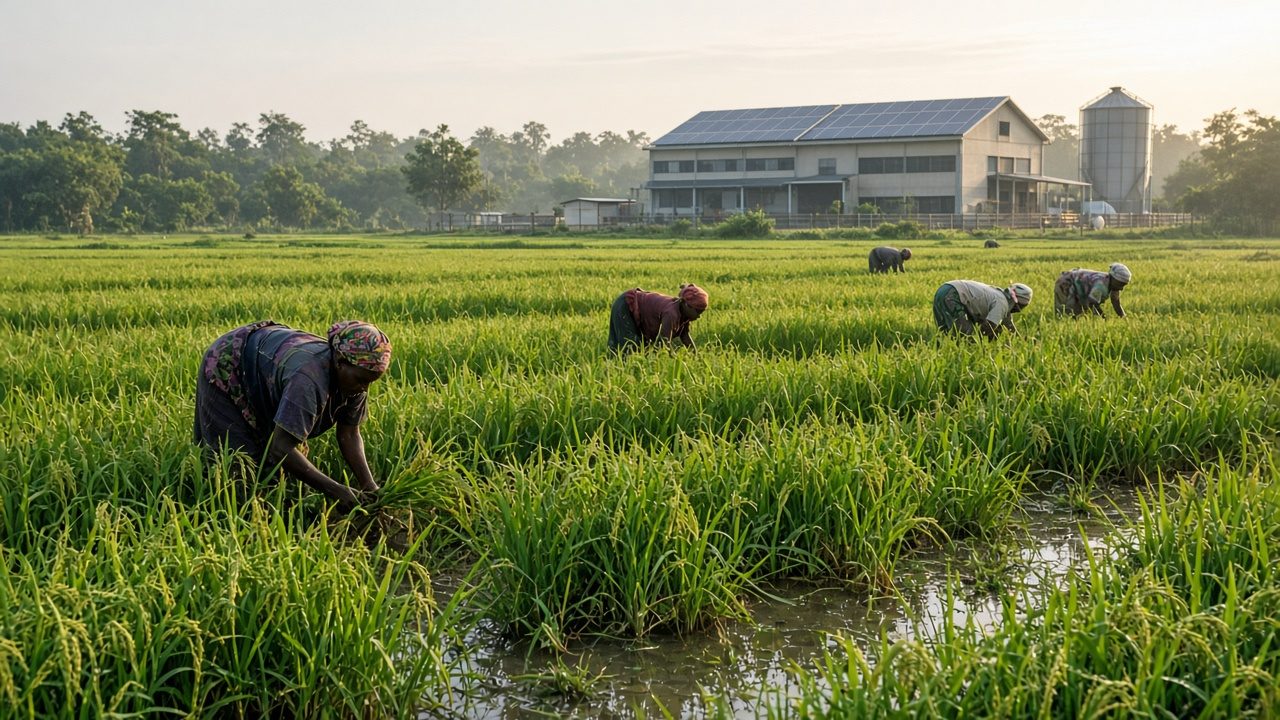
Sierra Leone is the working model other countries can copy. What is being done there now:
Rice hub (planning, early stage): one industrial mill, packaging hall and secondary-product line. Planned 450 direct factory jobs, 3,000 farm households on guaranteed offtake, 40,000 to 50,000 tonnes milled and packed a year, broken grain and bran turned into flour, noodles, cereal, bran oil and syrup. Phase 2 copies it in the north, south and east (about 1,350 direct jobs). These are program targets, not current headcount.
Gold: an earlier NI 43-101 report exists on the gold. An updated technical report under the current US standard (SEC S-K 1300) is being prepared. Until it is complete, nothing is backed by that gold. Once complete, the plan is to use the proven gold as collateral at about 30 percent of value.
Alignment: the work supports the government's Feed Salone program and critical minerals strategy.
How another country copies it: 1) form the citizens' company; 2) register a local operating subsidiary; 3) start with one agriculture hub that buys from local farmers; 4) get an independent reserve report on one mineral asset; 5) apply to DFC and African lenders with both; 6) add the value-add plant once collateral is approved.
Working with the US DFC
The trust is seeking financing from the US International Development Finance Corporation (DFC). Nothing has been approved yet.
Where DFC works (dfc.gov, Where We Work, checked October 29, 2026): DFC mainly supports low and lower-middle income countries. Under the DFC Modernization and Reauthorization Act of 2025 (part of the FY2026 defense authorization, P.L. 119-60) it may also invest in certain upper-middle and high-income countries, with limits. In every country the host government must have an investment agreement with the United States. DFC lists every African country except Libya and Sudan.
DFC eligibility checklist (dfc.gov): 1) the project is in a country where DFC works; 2) it meets DFC environmental and social standards (environment, worker rights, human rights, local communities); 3) it delivers development results or advances US foreign policy goals; 4) the management team has a proven, recent track record in the same or a close business, shown by financial statements; 5) private lenders have been approached first, since DFC complements them; 6) know-your-customer and due diligence review. Projects normally also need a US connection (US investors, partners or suppliers), which the US refinery and US sister bank provide.
Applications go through the DFC Forms dashboard after talking with a DFC investment officer (info@dfc.gov).
Staged rollout
Stage 1 (years 0 to 2): legal setup of citizens' companies in Sierra Leone, The Gambia, Senegal and Ivory Coast; Sierra Leone rice hub and Gambia agro-processing; S-K 1300 gold report; Gambia bank licence application; DFC applications.
Stage 2 (years 2 to 5): US refinery and Senegal refinery to LBMA standard; first loans against proven reserves; diamond grading labs in Sierra Leone, Botswana, Angola and DR Congo; grader training school; power plants for each site.
Stage 3 (years 5 to 10): battery plants (Zambia Battery Company, DR Congo, Zimbabwe, Morocco, Tanzania), steel in Guinea and South Africa, copper wire, fertilizer and refining plants; agri hubs in every willing country.
Stage 4 (year 10 and on): a network of sister banks holding metal reserves; launch of 40ATUF if laws allow; work toward one African currency with the African Union, ECOWAS and central banks.
Infrastructure cost benchmarks
Solar power: global average installed cost of utility solar was 758 US dollars per kW in 2023 (IRENA Renewable Power Generation Costs 2023). Planning estimate: a 20 MW plant for one processing site is about 15 million dollars before storage.
Rail: DFC approved a 553 million dollar loan in 2024 for the Lobito Atlantic Railway upgrade in Angola (dfc.gov). This is a real comparable for corridor rail.
Oil refining: the Dangote refinery in Nigeria (650,000 barrels per day) cost about 19 billion dollars (company statements). Smaller modular refineries cost far less.
Labs, refineries and mills: planning estimates only, to be replaced by engineering quotes: diamond lab 3 to 5 million dollars; gold refinery 20 to 50 million dollars; rice mill hub 15 to 30 million dollars.
Gold refineries and the trust bank in The Gambia
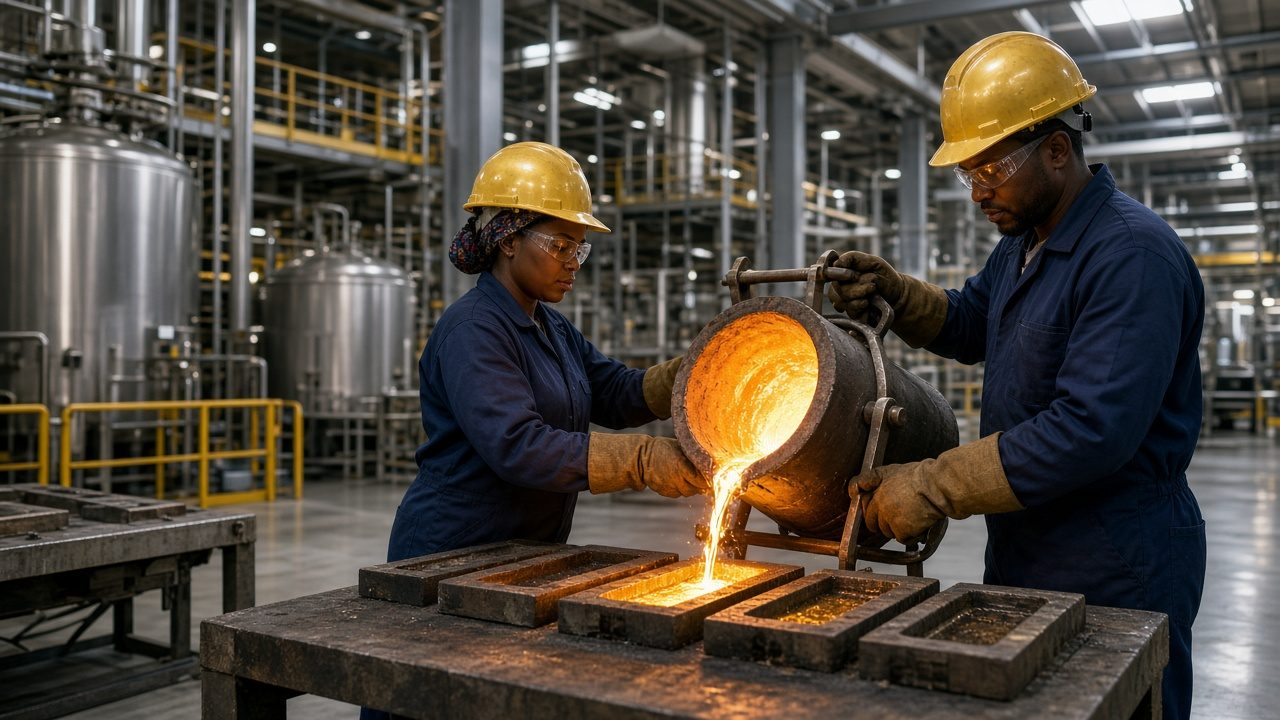
Refinery one is in the United States under the trust. Refinery two is a matching refinery in Senegal. Both would aim for the London Bullion Market Association (LBMA) Good Delivery standard so their bars are accepted worldwide, and follow the OECD Due Diligence Guidance for responsible mineral supply chains.
The bank in The Gambia (working name: World Bank of Africa) would hold deposits of gold, platinum, copper and silver, work as a sister bank to a US bank, and meet international safekeeping and banking standards (Basel capital rules and anti-money-laundering rules from the Financial Action Task Force). It would need a licence from the Central Bank of The Gambia.
The goal: African countries borrow against their own metal, held in Africa, instead of borrowing abroad. This builds on existing African institutions such as Afreximbank, the African Development Bank and the Pan-African Payment and Settlement System (PAPSS, launched 2022).
Mining, land, oil and gas rights: what the law allows
Patrick's goal is very long rights, up to 1,000 years with opt-in or opt-out renewals every 50 years and a first right of refusal. Honestly, no African mining code allows this today. Most cap a single mining licence at about 10 to 30 years, renewable while the mine is active (see the country table). Many constitutions also say minerals belong to the state.
The practical path: seek the longest term each law allows, written renewal rights, first right of refusal in each contract, and stabilization clauses. Where a country agrees, a law change or a special agreement ratified by parliament could add longer terms. Citizens' companies owning 51 percent also helps, because the rights stay with the people whoever is in government.
Build at home: value-add plants

Battery: cobalt, lithium, graphite and manganese go into a battery plant in-country (for example a Zambia Battery Company making commercial, car and electric vehicle batteries, plus contract builds to buyers' own specifications).
Steel: iron ore from Guinea, Sierra Leone, Liberia, Mauritania and South Africa is made into steel near the mine.
Diamonds: grading and testing labs in producing countries, run to internationally accepted standards (the Kimberley Process for origin, and grading methods recognized by buyers worldwide). We hire people who are already qualified first, because that is the fastest way, and send local people to school to train as graders at the same time.
Farm and food: cocoa, cashew, coffee, cotton, groundnuts and grain processed before export.
Oil and gas: refining and fertilizer made in producing countries instead of exporting crude.
Funding: in-ground assets as collateral
Planning assumption: lenders advance about 30 percent of the value of proven reserves. Loan amount = proven reserves x market price x 0.30. Example: 1 million ounces of proven gold x 2,386 US dollars per ounce (2024 average, LBMA) x 0.30 = about 716 million US dollars. Only proven, independently audited reserves (to a code such as JORC or NI 43-101) are normally accepted.
Country profiles
Ratings: Doable now, Doable with conditions, or Not realistic now. These are our honest judgment, using DFC status, political stability, sanctions, legal limits and existing contracts.
Population: World Bank 2024. Resources: USGS Mineral Commodity Summaries 2025, Kimberley Process statistics, EITI country reports. Licence terms: national mining codes as summarized; checked October 29, 2026 against the codes or official summaries. Direct jobs are planning estimates: number of planned plants x planning headcount per plant (battery plant 2,000; steel mill 2,500; oil or gas refinery 1,500; copper plant 1,500; alumina refinery 1,200; fertilizer plant 1,000; PGM plant 800; agri-processing hub 500; mineral plant 400; bank 200; gold refinery 150; diamond lab 150).
Sample values (estimates, volume x 2024 average price): DR Congo copper about 3.3 million t x 9,150 dollars per t = about 30 billion dollars. DR Congo cobalt about 220,000 t x about 25,000 dollars per t = about 5.5 billion dollars. Zambia copper 680,000 t (USGS MCS 2025) x 9,150 = about 6.2 billion dollars.
| Country | Pop. 2024 (M) | Key resources | Max mining licence | Value-add fit | Direct jobs (est.) |
|---|---|---|---|---|---|
| Sierra Leone | 8.64 | Iron ore, rutile, bauxite, diamonds (Kimberley Process member), rice, cocoa, coffee | Large-scale mining licence: up to 25 years, renewable (Mines and Minerals Development Act 2022; verify) | Diamond grading lab, rutile/titanium pigment pre-processing, rice milling | 1,550 |
| The Gambia | 2.76 | Mineral sands (ilmenite, zircon, rutile) in small volumes, groundnuts, fish, rice | 25 years or life of mine if shorter, extendable 15 years (Mines and Quarries Act 2005, s. 20 and 23) | Trust bank and vault (gold, platinum, copper, silver safekeeping), groundnut oil, fish processing | 1,200 |
| Senegal | 18.50 | Phosphate, gold, zircon and ilmenite (Grande Cote), oil (Sangomar, first oil June 2024), gas (GTA, shared with Mauritania), groundnuts, fish | Mining permit: up to 20 years, renewable (Mining Code 2016) | Matching gold refinery, phosphate fertilizer, oil and gas refining, groundnut processing | 3,650 |
| Ivory Coast | 31.93 | Cocoa (largest grower in the world), cashew, gold, manganese, oil and gas (Baleine field) | Exploitation permit: up to 20 years, renewable (Mining Code 2014) | Cocoa grinding and chocolate, cashew processing, gold refining | 2,400 |
| DR Congo | 109.28 | Cobalt (largest producer, about 220,000 t in 2024), copper (about 3.3 million t), tin, coltan, diamonds, gold | Exploitation permit: 25 years, renewable 15-year periods (Mining Code 2018) | Cobalt refining, battery precursor and cell plant, copper cathode and wire | 5,150 |
| Zambia | 21.31 | Copper (680,000 t in 2024, USGS), cobalt, emeralds, manganese, maize | Large-scale mining licence: up to 25 years, renewable (Mines and Minerals Development Act 2015) | Zambia Battery Company: cells, car and EV packs, plus contract builds to buyer specs; copper rod and cable | 4,000 |
| South Africa | 64.01 | Platinum group metals (largest producer), manganese, chrome, gold, iron ore, coal, citrus, maize | Mining right: up to 30 years, renewable up to 30 years (MPRDA) | PGM catalysts and fuel cells, steel, manganese alloys | 3,300 |
| Ghana | 34.43 | Gold (largest producer in Africa), cocoa, bauxite, manganese, oil (Jubilee field), lithium (Ewoyaa project) | Mining lease: up to 30 years, renewable (Minerals and Mining Act 2006) | Gold refinery, cocoa processing, lithium pre-processing | 1,650 |
| Nigeria | 232.68 | Crude oil (OPEC member), natural gas (largest proven gas reserves in Africa), tin, lithium, cassava, yams | Mining lease: up to 25 years, renewable (Minerals and Mining Act 2007) | Oil refining, gas-to-fertilizer, food processing | 4,500 |
| Botswana | 2.52 | Diamonds (a top producer by value), copper, soda ash, beef | Mining licence: up to 25 years, renewable (Mines and Minerals Act) | Diamond grading, cutting and polishing, copper cathode | 1,650 |
| Angola | 37.89 | Crude oil, diamonds, iron ore, coffee | Up to 35 years including exploration, extendable by 10-year periods (Mining Code, Law 31/11) | Diamond lab and cutting, oil refining | 1,650 |
| Guinea | 14.75 | Bauxite (largest exporter in the world), iron ore (Simandou), gold, diamonds | Mining concession: up to 25 years, renewable (Mining Code 2011, amended 2013) | Alumina refinery, steel and iron pellets | 3,700 |
| Mali | 24.48 | Gold, lithium (Goulamina), cotton | Large mine: up to 12 years, renewable by 10-year periods to depletion (Mining Code 2023, art. 83) | Gold refinery, cotton ginning and textiles | 1,150 |
| Zimbabwe | 16.63 | Lithium (largest in Africa), platinum, gold, chrome, tobacco | Special mining lease: up to 25 years, renewable up to 10 years (Mines and Minerals Act) | Lithium sulphate/battery chemicals, PGM processing | 2,800 |
| Namibia | 3.03 | Uranium, diamonds (mostly marine), zinc, gold, fish | Mining licence: up to 25 years, renewable (Minerals Act 1992) | Diamond grading and polishing, green hydrogen links | 550 |
| Tanzania | 68.56 | Gold, tanzanite (only source), graphite, nickel, natural gas, cashew | Special licence: life of ore body, renewable (Mining Act Cap. 123 R.E. 2023, s. 53 and 55) | Gold refinery, gemstone lab, graphite anode material | 2,300 |
| Morocco | 38.08 | Phosphate rock (largest reserves in the world), cobalt, citrus, fish | Mining licence: 10 years, renewable (Mining Law 33-13 of 2015) | Fertilizer, battery phosphate (LFP) cathode material | 3,000 |
| Country | Feasibility | Why | Government grants needed | Infrastructure first |
|---|---|---|---|---|
| Sierra Leone | Doable now | DFC eligible; trust already active (Director of Operations on the ground); stable elections | Large-scale mining licence and land lease; NMA export and refining licence; tax and duty terms in investment agreement; diamond lab accreditation | Power for mill and lab (solar plus storage); feeder roads; Freetown port access |
| The Gambia | Doable now | DFC eligible; Gambian subsidiary registered; bank licence from Central Bank of The Gambia is the main gate | Banking licence and vault approval (Central Bank of The Gambia); GIEPA investment certificate; land leases; food processing permits | Secure vault building; reliable power; Banjul port cold storage |
| Senegal | Doable now | DFC eligible; stable democracy; bank and refinery fall under WAEMU/BCEAO rules | Refinery and gold trading licence (Ministry of Mines); WAEMU banking approval if any lending; oil refining and fertilizer permits; land leases | Refinery building and assay lab; power; Dakar port export links |
| Ivory Coast | Doable now | DFC eligible; strong cocoa sector; cocoa marketing run by state Conseil du Cafe-Cacao | Processing licences and cocoa buying approval (Conseil du Cafe-Cacao); land leases; exploitation permit for gold | Power for grinders; rural roads; Abidjan and San Pedro port links |
| DR Congo | Doable with conditions | DFC eligible; conflict in the east; some US sanctions on individuals and firms; most big mines already under contract | Exploitation permit (Cadastre Minier); ARECOMS cobalt export quota terms; special economic zone status for battery plant | Power (grid is weak in Katanga); rail to Lobito or Dar es Salaam; water |
| Zambia | Doable with conditions | DFC eligible; existing mine owners hold the main licences; debt restructuring finished 2024 | Mining licence or offtake with existing mines; Zambia Development Agency incentives; industrial land | Power (2024 drought cut hydropower); Lobito and TAZARA rail |
| South Africa | Doable with conditions | DFC eligible; Black economic empowerment ownership rules; big PGM companies hold most rights | Mining right (DMRE) or offtake deal; empowerment ownership plan; manufacturing incentives | Reliable grid power (load shedding 2022 to 2024); port capacity |
| Ghana | Doable with conditions | DFC eligible; 2023 debt restructuring; small-scale mining reserved for Ghanaians | Mining lease (Minerals Commission); Gold Board / GoldBod refinery and export licence; cocoa processing licence (COCOBOD) | Assay lab and refinery; power; Tema port |
| Nigeria | Doable with conditions | DFC eligible; security in some regions; currency swings | Refinery licence (NMDPRA); mining lease (Mining Cadastre Office); gas supply agreement | Gas pipeline links; power; port and road |
| Botswana | Doable with conditions | DFC eligible; Debswana and De Beers agreement (2023) covers most diamonds; government favours local cutting | Diamond dealer and cutting licence; rough supply agreement (Okavango Diamond Company) | Lab and cutting building; skills training center |
| Angola | Doable with conditions | DFC eligible; diamond sales go through state firm Sodiam; Lobito Corridor already DFC backed | Diamond rights via Endiama and Sodiam; oil refining licence (ANPG) | Lab building; Lobito rail; refinery site |
| Guinea | Doable with conditions | DFC eligible; military-led transition since 2021; Simandou and bauxite already under major contracts | Mining convention approved by law; alumina refinery commitment terms | Large power plant (alumina needs a lot); rail and port (Simandou rail already built) |
| Mali | Not realistic now | DFC listed, but military government, 2023 code disputes with foreign miners and security risks | Exploitation permit under 2023 code; state and local stakes required by law | Power; secure transport |
| Zimbabwe | Doable with conditions | DFC eligible; US Global Magnitsky sanctions on some leaders (2024); raw lithium export ban since 2022 fits local processing | Mining licence; lithium beneficiation approval; export permits | Power; rail to Beira |
| Namibia | Doable now | DFC eligible; stable; diamonds mostly under Namdeb (state and De Beers) | Diamond licence (Ministry of Mines and Energy); polishing agreement | Lab building; Walvis Bay port |
| Tanzania | Doable with conditions | DFC eligible; 2017 law changes favour state free-carried stake and local processing | Mining licence (Mining Commission); gold refinery permit; state free-carried interest terms | Power; Central rail line; Dar es Salaam port |
| Morocco | Doable with conditions | DFC eligible; phosphate held by state firm OCP, so partner not owner | Partnership with OCP; industrial zone status | Industrial zone power and water (desalination) |
All other African Union member countries (one agri-processing hub each in Phase 1, 500 direct jobs per hub, estimate):
| Country | Pop. 2024 (M) | Main resources | Feasibility |
|---|---|---|---|
| Algeria | 46.81 | Natural gas, oil, iron ore, phosphate | Doable with conditions: DFC listed; needs government agreement and feasibility work |
| Egypt | 116.54 | Gas, oil, gold, phosphate, cotton | Doable with conditions: DFC listed; needs government agreement and feasibility work |
| Libya | 7.38 | Crude oil, gas | Not realistic now: Not DFC listed; divided government |
| Tunisia | 12.28 | Phosphate, olive oil | Doable with conditions: DFC listed; needs government agreement and feasibility work |
| Ethiopia | 132.06 | Coffee, gold, potash | Doable with conditions: DFC listed; needs government agreement and feasibility work |
| Kenya | 56.43 | Tea, flowers, soda ash, titanium sands | Doable with conditions: DFC listed; needs government agreement and feasibility work |
| Uganda | 50.02 | Coffee, gold, oil in development | Doable with conditions: DFC listed; needs government agreement and feasibility work |
| Mozambique | 34.63 | LNG, graphite, coal, rubies | Doable with conditions: DFC listed; needs government agreement and feasibility work |
| Madagascar | 31.96 | Nickel, cobalt, graphite, vanilla | Doable with conditions: DFC listed; needs government agreement and feasibility work |
| Cameroon | 29.12 | Oil, gas, cocoa, timber | Doable with conditions: DFC listed; needs government agreement and feasibility work |
| Gabon | 2.54 | Manganese, oil, timber | Doable with conditions: DFC listed; needs government agreement and feasibility work |
| Congo Republic | 6.33 | Oil, potash, iron ore | Doable with conditions: DFC listed; needs government agreement and feasibility work |
| Burkina Faso | 23.55 | Gold, cotton | Not realistic now: Military government and insecurity |
| Niger | 27.03 | Uranium, oil | Not realistic now: Military government since 2023 |
| Chad | 20.30 | Oil, cotton | Doable with conditions: DFC listed; needs government agreement and feasibility work |
| Sudan | 50.45 | Gold, gum arabic, livestock | Not realistic now: Not DFC listed; civil war |
| South Sudan | 11.94 | Oil | Not realistic now: Conflict and fragile state |
| Mauritania | 5.17 | Iron ore, gold, gas, fish | Doable with conditions: DFC listed; needs government agreement and feasibility work |
| Liberia | 5.61 | Iron ore, rubber, gold | Doable with conditions: DFC listed; needs government agreement and feasibility work |
| Togo | 8.41 | Phosphate, cotton | Doable with conditions: DFC listed; needs government agreement and feasibility work |
| Benin | 14.46 | Cotton, cashew | Doable with conditions: DFC listed; needs government agreement and feasibility work |
| Guinea-Bissau | 2.20 | Cashew, fish | Doable with conditions: DFC listed; needs government agreement and feasibility work |
| Cabo Verde | 0.52 | Fish, tourism | Doable with conditions: DFC listed; needs government agreement and feasibility work |
| Sao Tome and Principe | 0.24 | Cocoa | Doable with conditions: DFC listed; needs government agreement and feasibility work |
| Equatorial Guinea | 1.89 | Oil, gas | Doable with conditions: DFC listed; needs government agreement and feasibility work |
| Central African Rep. | 5.33 | Diamonds, gold, timber | Not realistic now: Conflict; diamond exports long restricted under the Kimberley Process |
| Rwanda | 14.26 | Tin, tantalum, tungsten, coffee, tea | Doable with conditions: DFC listed; needs government agreement and feasibility work |
| Burundi | 14.05 | Nickel, coffee | Doable with conditions: DFC listed; needs government agreement and feasibility work |
| Malawi | 21.66 | Tobacco, rare earths | Doable with conditions: DFC listed; needs government agreement and feasibility work |
| Lesotho | 2.34 | Diamonds, water | Doable with conditions: DFC listed; needs government agreement and feasibility work |
| Eswatini | 1.24 | Sugar | Doable with conditions: DFC listed; needs government agreement and feasibility work |
| Eritrea | 3.54 | Copper, gold, zinc | Not realistic now: Closed economy |
| Djibouti | 1.17 | Port, salt | Doable with conditions: DFC listed; needs government agreement and feasibility work |
| Somalia | 19.01 | Livestock, fish | Not realistic now: Insecurity |
| Comoros | 0.87 | Vanilla, cloves | Doable with conditions: DFC listed; needs government agreement and feasibility work |
| Mauritius | 1.25 | Sugar, finance | Doable with conditions: DFC listed; needs government agreement and feasibility work |
| Seychelles | 0.12 | Fish, tourism | Doable with conditions: DFC listed; needs government agreement and feasibility work |
Feeding the continent
Agricultural land, 54 countries, 2023: about 11.78 million km2. Arable land: about 2.66 million km2 (World Bank, from FAO data).
Poultry meat eaten in 43 FAOSTAT countries (1.31 billion people), 2023: 9.19 million t; 7.59 million t produced at home; 1.68 million t imported. Beef: 6.15 million t eaten; 5.90 million t produced; 0.34 million t imported (FAOSTAT Food Balance Sheets).
Farmland and crops by lead country (farm land km2 / arable km2 / crops that suit it, World Bank 2023 and FAO): Sierra Leone 39,490 / 15,840 / rice, cassava, oil palm, cocoa. The Gambia 7,692 / 5,880 / groundnuts, millet, rice. Senegal 95,126 / 38,300 / groundnuts, millet, rice, onions. Ivory Coast 258,936 / 46,823 / cocoa, cashew, yams, cassava, rubber. DR Congo 362,202 / 160,631 / cassava, maize, plantain, oil palm. Zambia 238,404 / 38,000 / maize, soybeans, sugarcane, wheat. South Africa 963,410 / 120,000 / maize, sugarcane, citrus, wheat, grapes. Ghana 126,030 / 47,099 / cocoa, cassava, yams, maize. Nigeria 702,012 / 371,840 / cassava, yams, maize, sorghum, rice. Botswana 258,620 / 2,600 / sorghum, mainly cattle. Angola 452,787 / 45,673 / cassava, maize, coffee, bananas. Guinea 179,681 / 59,553 / rice, cassava, groundnuts, fruit. Mali 416,776 / 67,076 / cotton, millet, sorghum, rice. Zimbabwe 185,903 / 40,204 / maize, tobacco, wheat. Namibia 388,120 / 7,985 / millet, irrigated grapes, mainly livestock. Tanzania 398,770 / 137,018 / maize, cassava, cashew, rice. Morocco 300,000 / 71,635 / wheat, barley, citrus, olives, tomatoes.
Poultry land (estimate): 7.0 kg per person (FAOSTAT 2023) x 1.51 billion = about 10.6 million t a year. Assumption: 20 birds per m2 x 6 flocks a year x 1.8 kg per bird = 216 kg per m2 a year. Result: about 49 km2 of house floor, about 150 km2 with spacing and feed stores.
Cattle land (estimate): 4.7 kg per person x 1.51 billion = about 7.1 million t a year. Assumption: 100 kg beef per hectare a year on improved pasture. Replacing imports: 340,000 t / 100 kg = 3.4 million ha (34,000 km2). All beef: 71 million ha (710,000 km2), about 6 percent of today's farm land, much of it already grazed.
Fencing (estimate): 10,000 ha blocks need 40 km of fence each; 340 blocks = about 13,600 km. At a planning estimate of 10,000 to 30,000 dollars per km, about 136 million to 408 million dollars, to be replaced by contractor quotes.
Indoor farms: climate-controlled greenhouses and vertical farms near cities for crops that do not grow locally, sized per country after a demand study.
Protecting wildlife
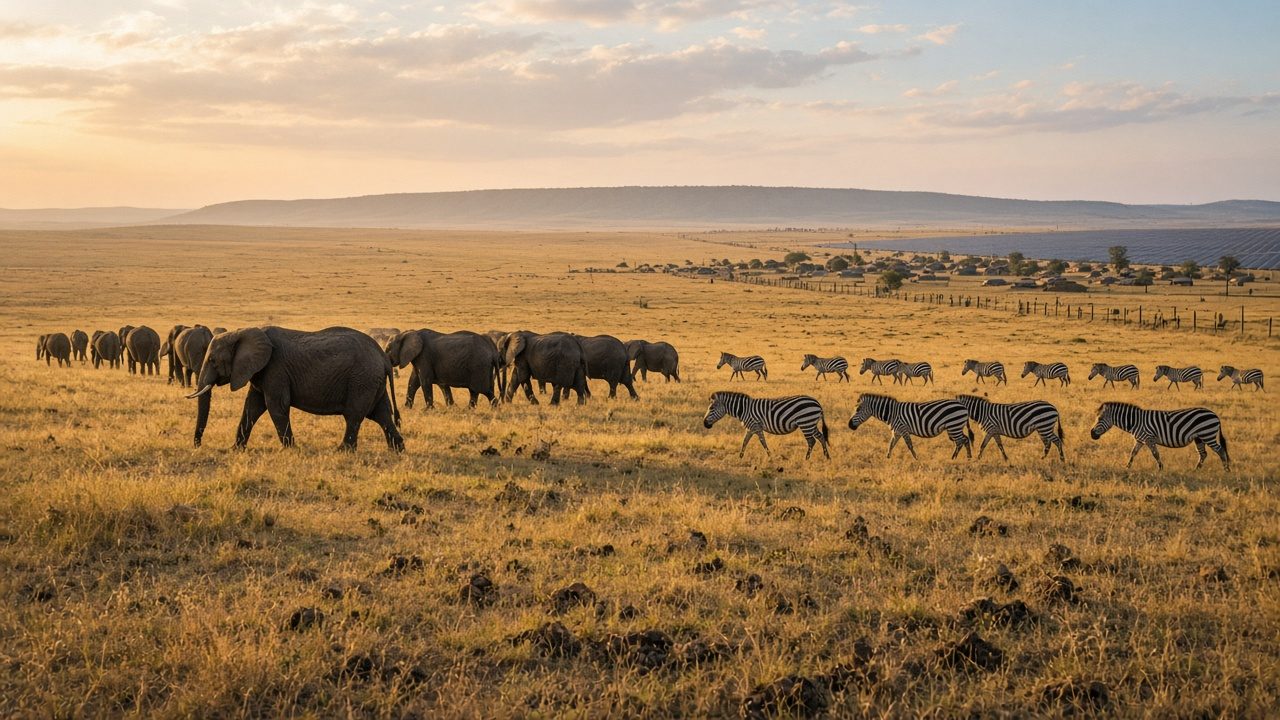
No farms, plants or housing inside national parks, game reserves or protected areas listed on Protected Planet. Build in or next to places where people already live, on land already cleared. Keep migration corridors open and follow environmental impact rules and DFC standards.
Cities that work
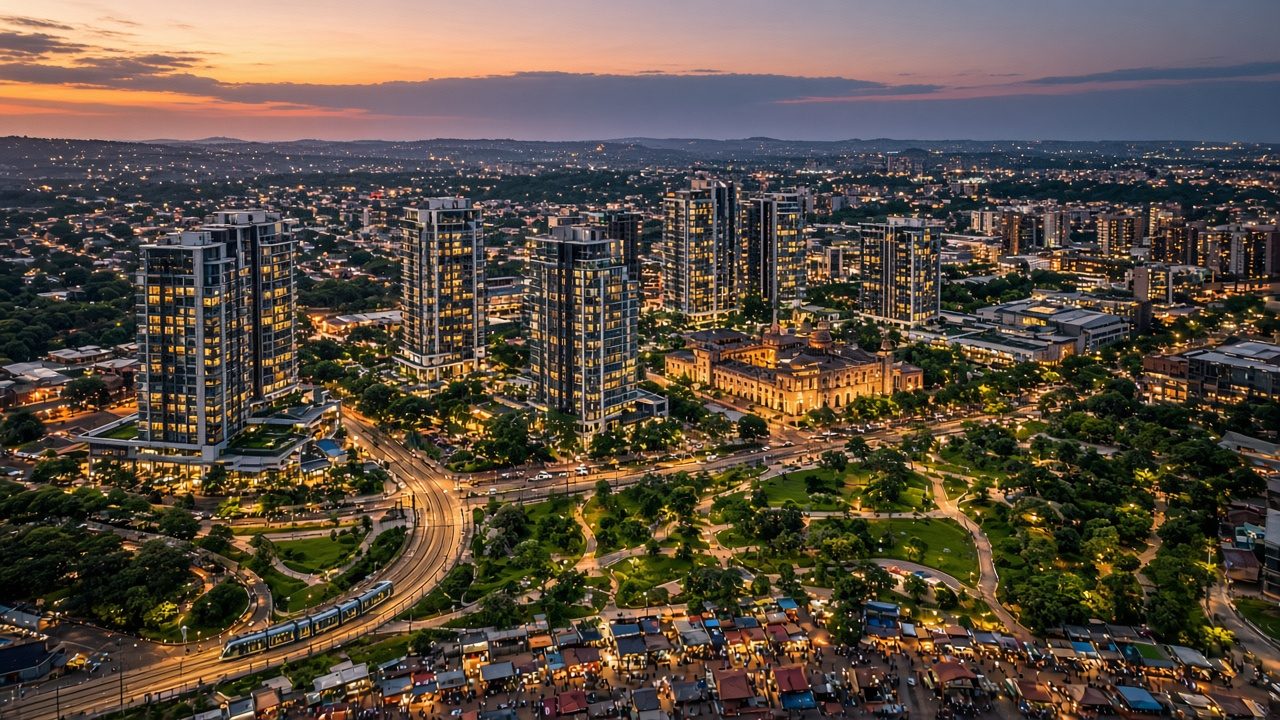
Vertical housing in crowded cities, with water, power and transit. Rebuild old colonial-era city cores into working cities with modern roads, drainage, markets and public space, planned with local governments and residents, keeping historic and cultural sites.
Health and bringing talent home
Medical research labs in each region, linked to universities and hospitals. Recruit African doctors, nurses and scientists working abroad with good pay, housing and research funding, and train local students alongside them.
Respecting traditional communities
People who choose a traditional life in the bush are left alone; no one is moved for this plan. Tribes keep their land, customs and leaders. Hospitals, clinics and mobile health teams still reach rural areas, offered, never forced.
Continent totals
Population, 54 countries, 2024: about 1.51 billion (World Bank).
Phase 1 direct jobs (estimate): 44,200 in the 17 lead countries plus 18,500 from one agri hub in each of the other 37 countries = 62,700.
Total jobs (estimate): direct jobs x 3, assuming 2 supplier and service jobs per direct job = 188,100.
Planned coin: 40 Acre Trust 40ATUF
40ATUF (ticker 40ATUF) is a planned future digital coin tied to the United Africa plan. It is separate from the existing 40ATCE coin. It has not been issued, is not on any blockchain yet, and has no price. Its design, legal review and backing will be set out before any launch. Nothing here is an offer or a promise of value or profit.
The capstone: one currency, Africa's own banking system
The end goal is Africa's own banking system with one currency for the whole continent, with 40ATUF backed by metal held at the trust bank in The Gambia.
This builds on efforts already under way. The African Union's Abuja Treaty (1991) calls for an African Central Bank and a single African currency; the planned bank is to sit in Abuja, Nigeria, and target dates have moved several times. Today 14 countries use the CFA franc in two zones: the West African CFA franc (8 WAEMU countries, BCEAO) and the Central African CFA franc (6 CEMAC countries, BEAC), both pegged to the euro. ECOWAS adopted the name Eco for a planned West African single currency in 2019; its launch has been postponed, with 2027 the current target.
Any coin or currency would need approval from central banks and regulators, and would work alongside these efforts, not around them.
Our purpose
"I just want to see the people do better." Patrick Gillum
Next steps
Confirm the legal setup of the citizens' companies in the four lead countries. Commission independent reserve audits for the first collateral package. Prepare licence applications for the two refineries and the Gambia bank. Open talks with Afreximbank, AfDB and national governments. Begin the diamond grader training program.
Patrick Gillum, Founder, 40 Acre Trust
Sources
World Bank population data (data.worldbank.org, SP.POP.TOTL). USGS Mineral Commodity Summaries 2025 (pubs.usgs.gov). Kimberley Process statistics (kimberleyprocessstatistics.org). EITI country reports (eiti.org). FAOSTAT Food Balance Sheets (fao.org/faostat). World Bank land data (AG.LND.AGRI.K2, AG.LND.ARBL.ZS). Protected Planet (protectedplanet.net). IMF country reports (imf.org). UN World Population Prospects (population.un.org). Afreximbank (afreximbank.com), AfDB (afdb.org). LBMA Good Delivery rules (lbma.org.uk). National mining codes as named in the table. African Union Abuja Treaty (au.int). ECOWAS (ecowas.int).
Patrick Gillum, Founder, 40 Acre Trust